


 CS Series
 CSmicro Series
 CTi Series
 CT Laser Series
 CS Laser Series
 CT Ratio Series
 CS Vision Series
 Accessories for Pyrometers
 IR Thermometer Configurator
 Optics Calculator
 Compact Line
 Precision Line
 Accessories for IR Cameras
 Condition Monitoring Systems
 IR Microscopes
 Glass Inspection Systems
 Industrial Packages
 Furnace Package

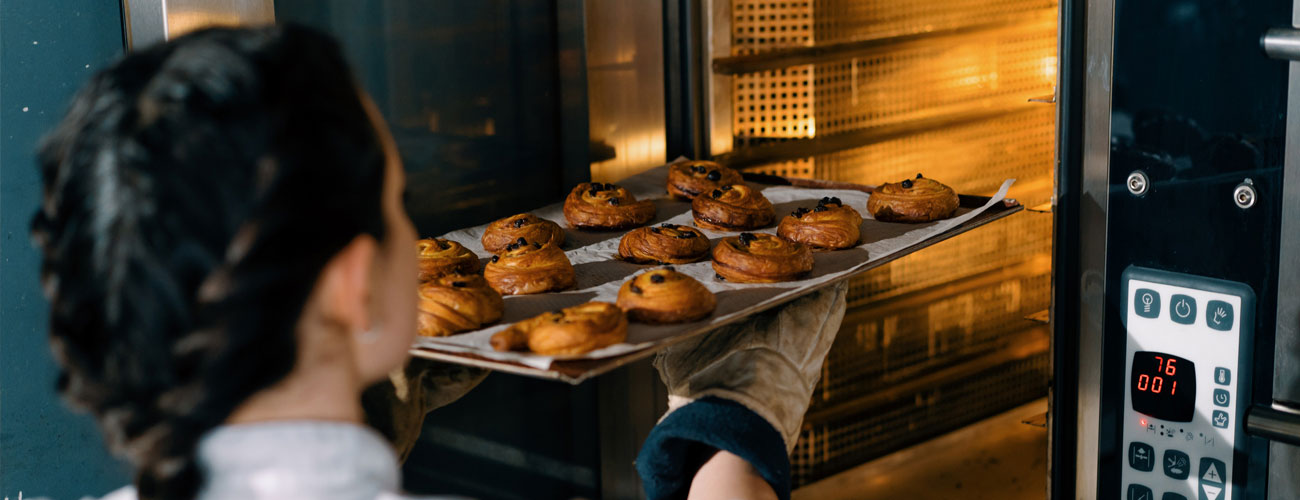
The Science Behind Baking
Baking is one of the oldest forms of food preparation, with its roots tracing back thousands of years. Today, it is an essential sector of food manufacturing, producing everything from bread and biscuits to pastries and pies. The industry has evolved significantly, with large-scale bakeries relying on automated processes to ensure consistency, efficiency, and food safety. However, precision in temperature control remains critical at every stage—from ingredient storage and mixing to baking and cooling.
For leading Australian brands like Arnott’s, Helga’s, Patties Foods and Sara Lee, maintaining optimal baking conditions is essential to delivering high-quality products.
Understanding the Baking Process
The baking industry consists of several key stages, each requiring precise temperature and environmental monitoring to maintain quality, safety, and efficiency.
1. Ingredient Storage and Preparation
The first stage in baking involves storing and preparing raw ingredients like flour, sugar, eggs, and dairy. Temperature control in storage areas is crucial to maintaining ingredient integrity. For example, butter and dairy products must be kept at refrigeration temperatures, while flour should be stored in dry, cool environments to prevent spoilage.
2. Mixing and Kneading
Once ingredients are measured, they are mixed to form dough or batter. Temperature plays a key role here—particularly in bread-making. Dough temperature influences fermentation rates and the final product’s texture. Too cold, and yeast activity slows down; too warm, and the dough ferments too quickly, affecting the final structure.
3. Proofing (For Yeast-Based Products)
Proofing is the process of allowing dough to rest and rise before baking, typically under controlled temperature and humidity. Commercial bakeries use proofing chambers to maintain optimal conditions, usually around 30–40°C with 75–85% relative humidity. Fluctuations in these conditions can result in inconsistent dough expansion, leading to poor product quality.
4. Baking
The baking process is where precision temperature control is most critical. Industrial ovens operate at a range of temperatures, depending on the type of baked good:
- Bread: 175–230°C
- Biscuits and Cookies: 150–200°C
- Pastries and Pies: 180–220°C
Ovens equipped with conveyor belts ensure continuous and even baking, but temperature inconsistencies can cause underbaking or overbaking, affecting taste, texture, and shelf life. IR (infrared) measurement technology is commonly used to monitor surface temperatures in real-time, ensuring uniform heat distribution.
5. Cooling and Packaging
Once baked, products must cool before packaging to prevent condensation, which can lead to mould growth. Cooling systems use controlled airflows, and temperature monitoring ensures proper cooling rates. If products are packaged too early, residual heat can create moisture buildup inside packaging, affecting product quality.
6. Storage and Distribution
After packaging, baked goods are stored and distributed under specific conditions to maintain freshness. Refrigerated transport may be necessary for products containing perishable ingredients, while ambient storage conditions require strict monitoring to prevent spoilage.
The Importance of Temperature and Environmental Monitoring
Temperature and environmental conditions affect every stage of the baking process, and a lack of proper monitoring can lead to product inconsistencies, food safety risks, and wastage. Some critical aspects that require monitoring include:
- Oven temperature consistency: Ensuring even baking and proper texture development.
- Humidity control in proofing chambers: Maintaining the right conditions for yeast activation.
- Cooling rates: Preventing moisture-related quality issues.
- Storage and transport conditions: Keeping products fresh and safe for consumption.
Fun Fact: The Science of Cookie Texture
Did you know that the texture of a cookie depends on the baking temperature? A lower temperature (~160°C) results in softer, chewier cookies, while higher temperatures (~190°C) create crispier edges. This is due to the rate at which butter melts and sugar caramelises!
ECEFast: Your Solution for Temperature and Environmental Monitoring
At ECEFast, we understand the crucial role that temperature plays in food manufacturing, particularly in the baking industry. We offer a range of advanced solutions, including:
- Infrared (IR) temperature measurement for real-time monitoring of baking processes.
- Wireless temperature and humidity sensors for proofing chambers and storage areas.
- Data loggers to track and analyse environmental conditions throughout the production cycle.
With over 90 years of expertise, ECEFast is the trusted partner for Australian food manufacturers. Our innovative monitoring solutions ensure that every batch meets the highest standards of quality, consistency, and safety.
For more information on how we can help you optimise your baking processes, contact our team today!